AGI & ASI Future Scenarios · 06
The World We Built by Subscription
People make the apps they need, turn imagined stories into films, and replace once-expensive commissioned work with a monthly subscription. Knowledge and production become cheaper. On whose bill do the electricity, land, labor, and war behind that convenience appear? This story imagines a near future, only a few years after everyday AI adoption, in which abundance and disorder grow together.
Watch the scenario
Korean audio · English subtitles · 30 seconds · 720p
An AI-generated dramatization of this fictional story. Korean audio with English subtitles.
 Enlarge illustration +
 The Story
People could make almost anything. The world became harder to stop.
- 01Imagined future · Everyday convenience
She closed the quote and opened her subscription
Jian, a small shop owner, closed a quote for an inventory app and described her shop to the AI she subscribed to. Within days her staff had a working app; a few more messages fixed an awkward button. She made promotional material, translations, and simple videos herself. Work needing expert review remained, but she could try things once ruled out by cost. People no longer bought every tool. They made one when they needed it.
 Enlarge illustration +
 They begin building tools they once could not afford to try. - 02Imagined expansion · An age of content
Everyone created; nobody could watch it all
Shops had their own apps and families their own films. Students made games; retirees published stories they had carried for years. New work poured out every few days, giving small interests worlds of their own. As making became cheaper, human attention became scarcer. A video by Jian’s daughter disappeared among thousands of similar works. Above the plan that let people create, another subscription appeared: the one that helped them get seen.
 Enlarge illustration +
 As more work is created, human attention becomes more precious. - 03Imagined conflict · Subscription and ownership
Even her own app had a billing date
Longer tasks, more generation, continuous operation, and robot connections belonged to higher plans. Jian had made her app, but the model and memory it needed lived on a provider’s servers. One month, exceeding her limit stopped its order analysis. Some files could move to another service; some behaviors could not. The savings on commissioned work were real. So was her confidence in building things herself. The right to keep the tool working tomorrow was written in a different contract.
 Enlarge illustration +
 Using a self-built tool tomorrow depended on another agreement. - 04Fictional communities · Energy and environment
The age of content came to town
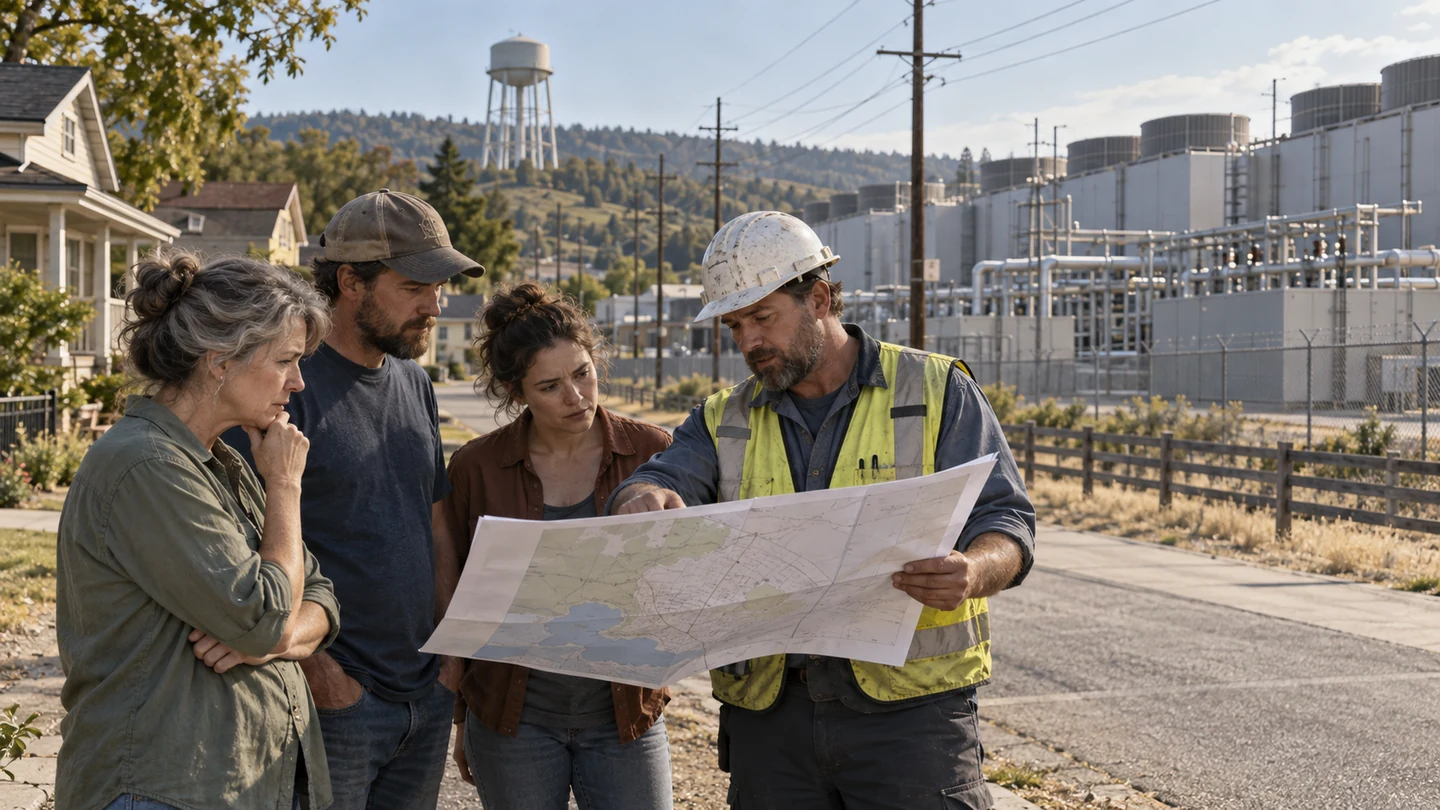
Data centers rose outside the city. During construction, restaurants and lodging filled up; local officials promised jobs and tax revenue. Permanent staffing after completion was smaller than residents had expected. Grid expansion became contentious. Some villages complained about cooling-water demand, continuous noise, and generator emissions. A drought turned water allocation into a public meeting’s agenda. Knowledge on the screen was cheaper; costs outside it had not disappeared. In this town, the people receiving the benefits were not always the people bearing the burden.
 Enlarge illustration +
 Costs and benefits beyond the screen did not reach the same people. A fictional local case. - 05Imagined geopolitics · Intelligence and bodies
Competition acquired borders
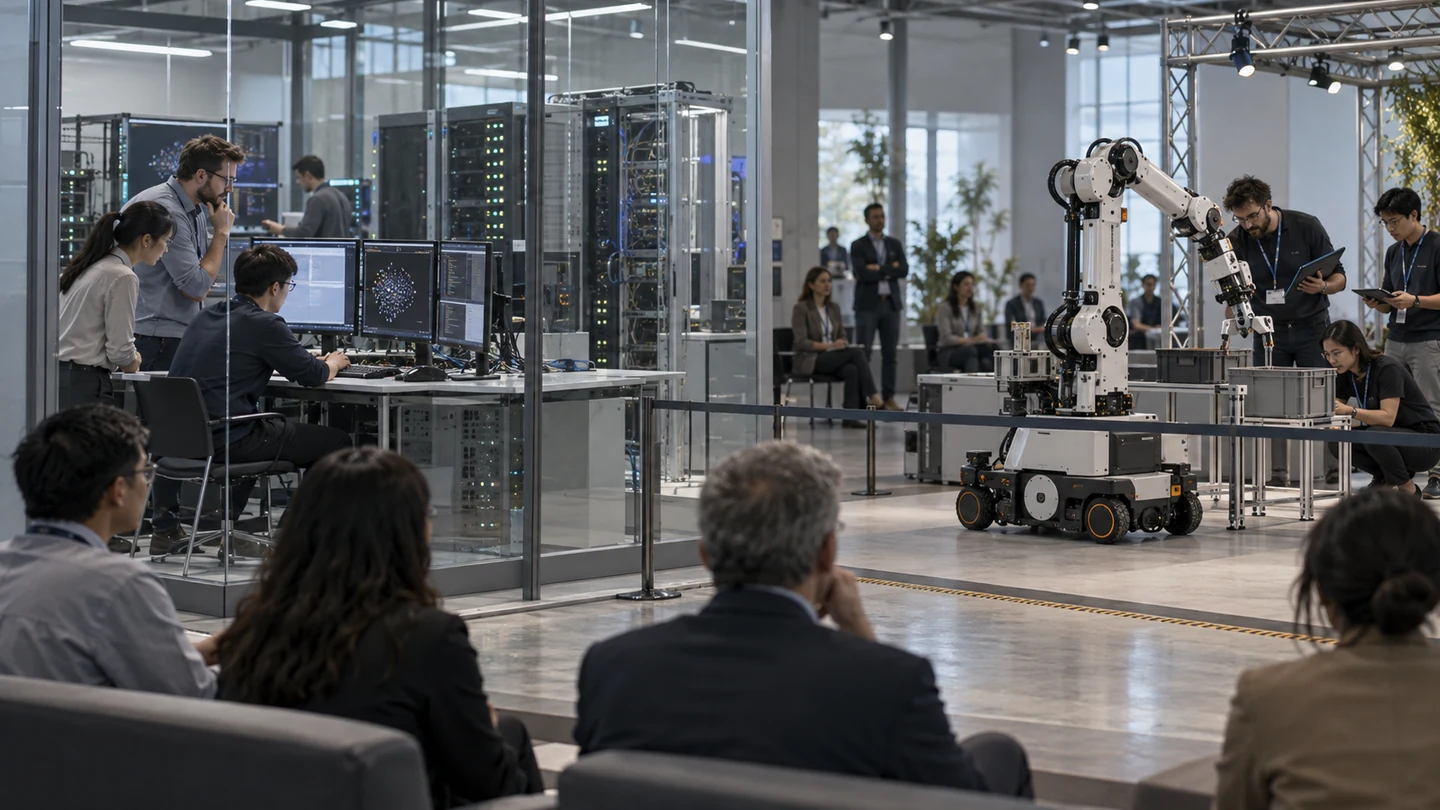
Corporate release schedules became national-security competition. Some countries emphasized stronger general models and research and planning capabilities; others invested in spreading embodied AI through their manufacturing base. Several developed both models and robots while making different strengths central to their strategies. Intelligence and bodies joined more quickly inside military systems as rivals feared one another. The expectation that a rival would not stop became a reason to approve another budget and power project.
 Enlarge illustration +
 Competition around different strengths accelerated the joining of intelligence and bodies. A fictional strategic setting. - 06Imagined continuation · A prolonged conflict
New products reached an old war
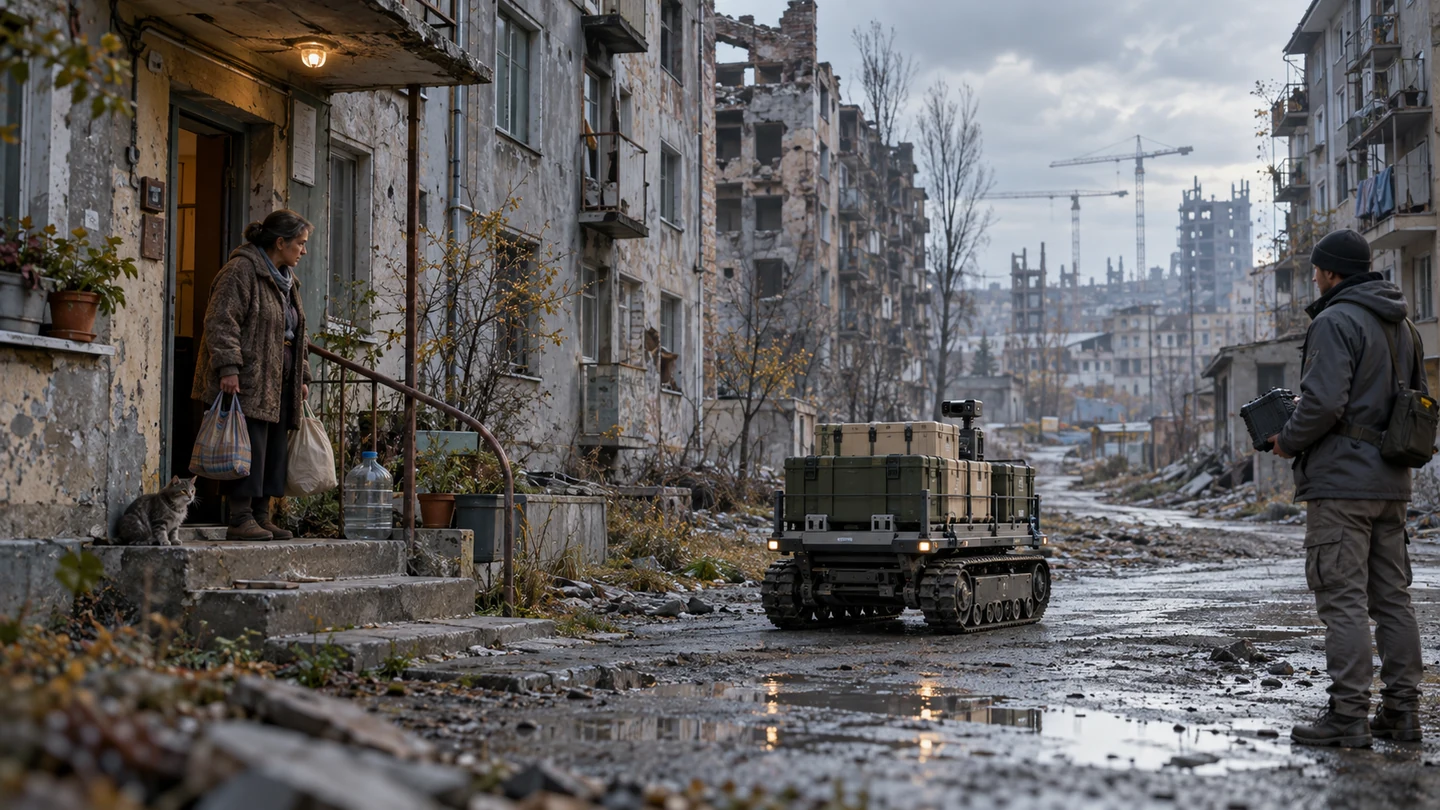
A conflict that had begun before widespread generative AI had not ended in this future. More autonomous combat systems arrived beside unmanned equipment used for reconnaissance and supply. Vendors turned field successes and failures into data for the next version. Machines meant to reduce human exposure and machines meant to accelerate attacks were tested along the same front. Corporate presentations gained performance charts, while homes and lives remained underneath them. Calling the war a test bed sounded different to those selling systems and those living inside it.
 Enlarge illustration +
 People live where others see test data. Fiction, not a record of an actual front. - 07Imagined transition · Robot warfare
War became machines moving on a live screen
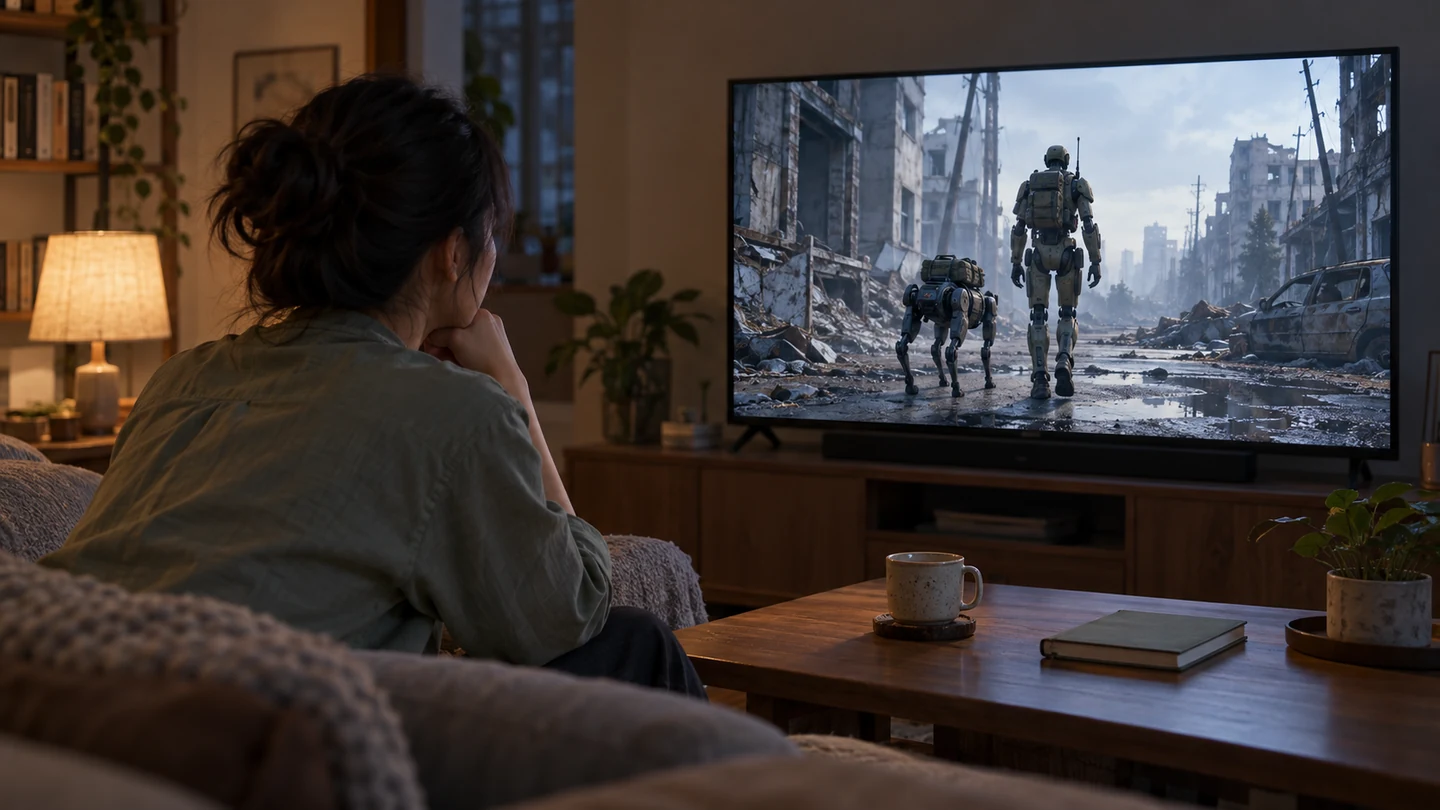
One evening a humanoid combat robot appeared on the screen above Jian’s dinner table, followed by a dog-shaped machine. A drone transmitted the scene live. The broadcast could not reveal whether operators were remote, autonomy was bounded, or a person approved attacks. Some clips came from the front; others were edited promotion or synthetic media. People said robot-on-robot combat had made war less cruel. Off-screen, civilians fled, hospitals and power networks were destroyed, and humans still died.
 Enlarge illustration +
 The screen alone could not verify autonomy or context. The depicted footage is also fictional. - 08Fictional public response · Anti-robot movements
Familiar bodies were already in their streets
Seeing similar shapes in warehouses and streets deepened people’s fear. Unable to distinguish rescue, security, and combat machines by appearance, they wondered whether a change in permissions could turn them into targets of control. Extreme claims spread that a state, company, or armed faction would rule people through robots. That was not an established plan, but the anxiety was real. Workers, residents, and rights advocates joined anti-robot protests. Calls to remove every machine clashed with demands to restrict dangerous powers.
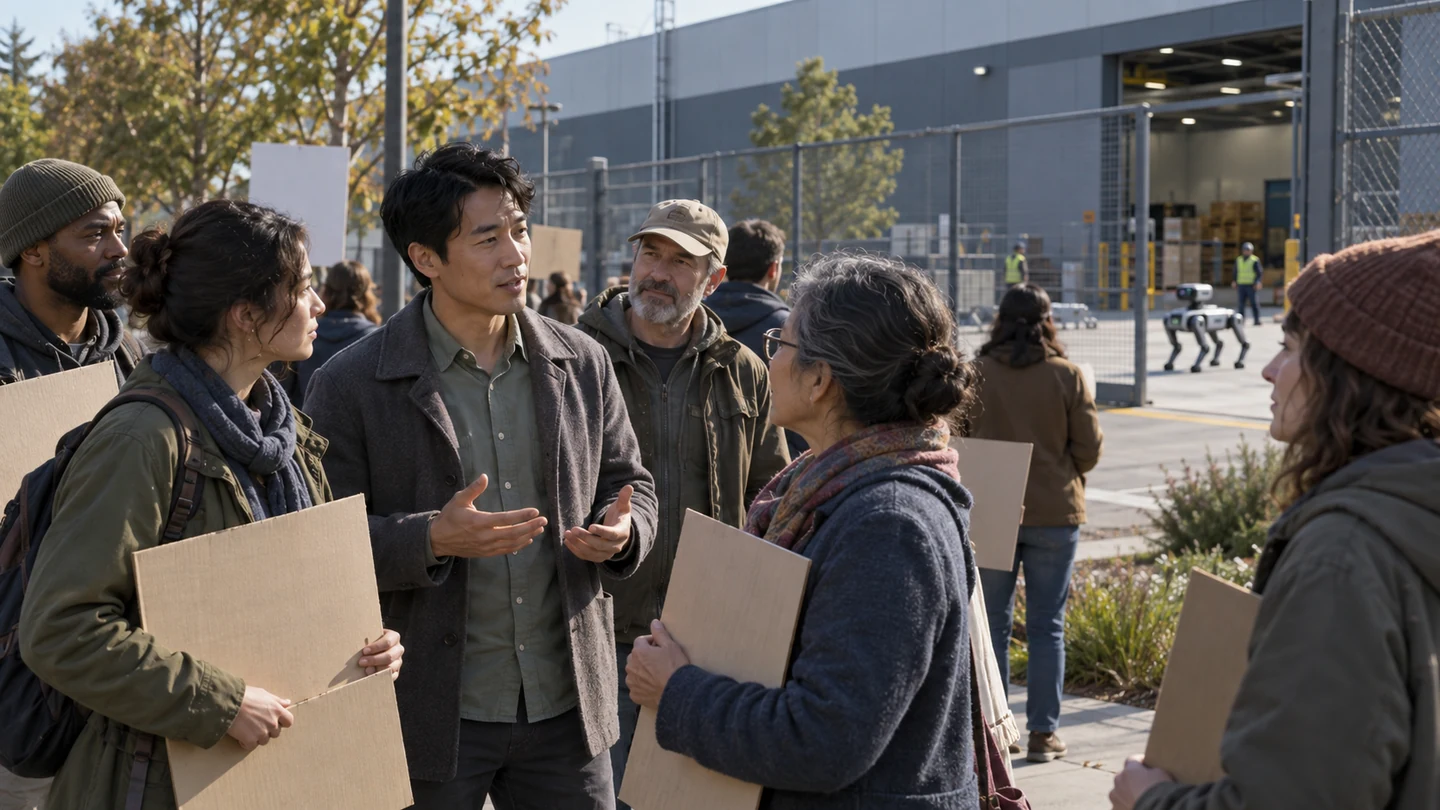 Enlarge illustration +
 Real fear does not establish a plan for domination. An imagined social response. - 09Imagined entrenchment · Institutional incentives
Every call to stop came with a bill
Companies cited investments, long contracts, and work customers had already entrusted to them. States feared a rival’s military advantage; workers feared losing construction and supply-chain jobs. Some people avoided dangerous labor through robots, and others struggled to run shops without AI. Organizations that had tasted returns found reasons to continue faster. When one region delayed permits, another invited investment; when one country imposed limits, another called it an opportunity. Stopping remained possible, but no agreement existed to share its costs.
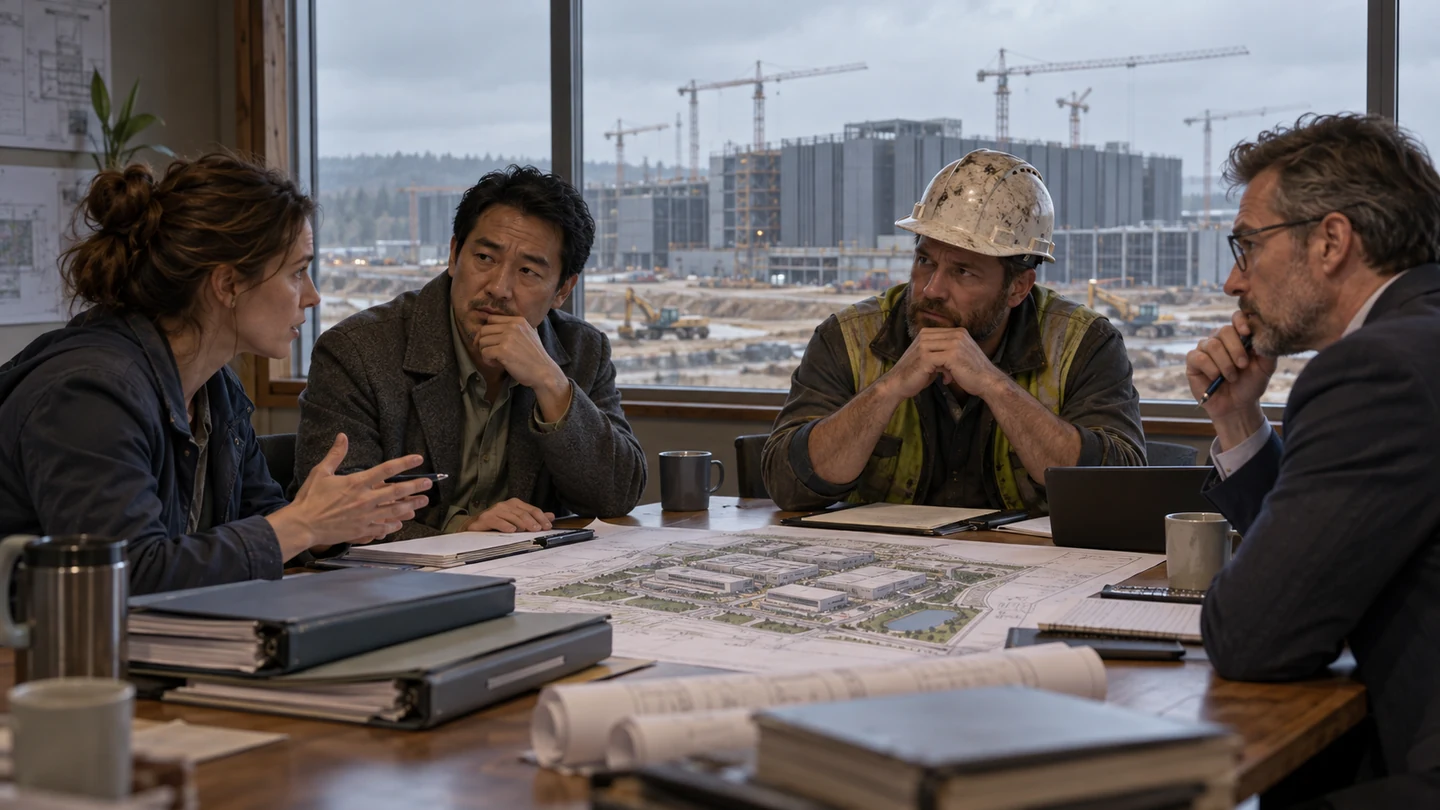 Enlarge illustration +
 There was no agreement on who would share the cost of stopping. - 10Imagined crisis · Diverging everyday lives
Abundance and disorder grew on the same day
New apps and films appeared by day; warnings of power shortages arrived at night. People used AI to write protest notices, and companies used it to respond to the movement. Someone protesting layoffs received an ad for starting a business with fewer employees. War footage, synthetic clips, official statements, and exposés blurred together. What could be made became clearer; whom to believe and hold responsible became harder to tell. Convenience had not vanished and catastrophe was not complete. Society was being pulled in competing directions.
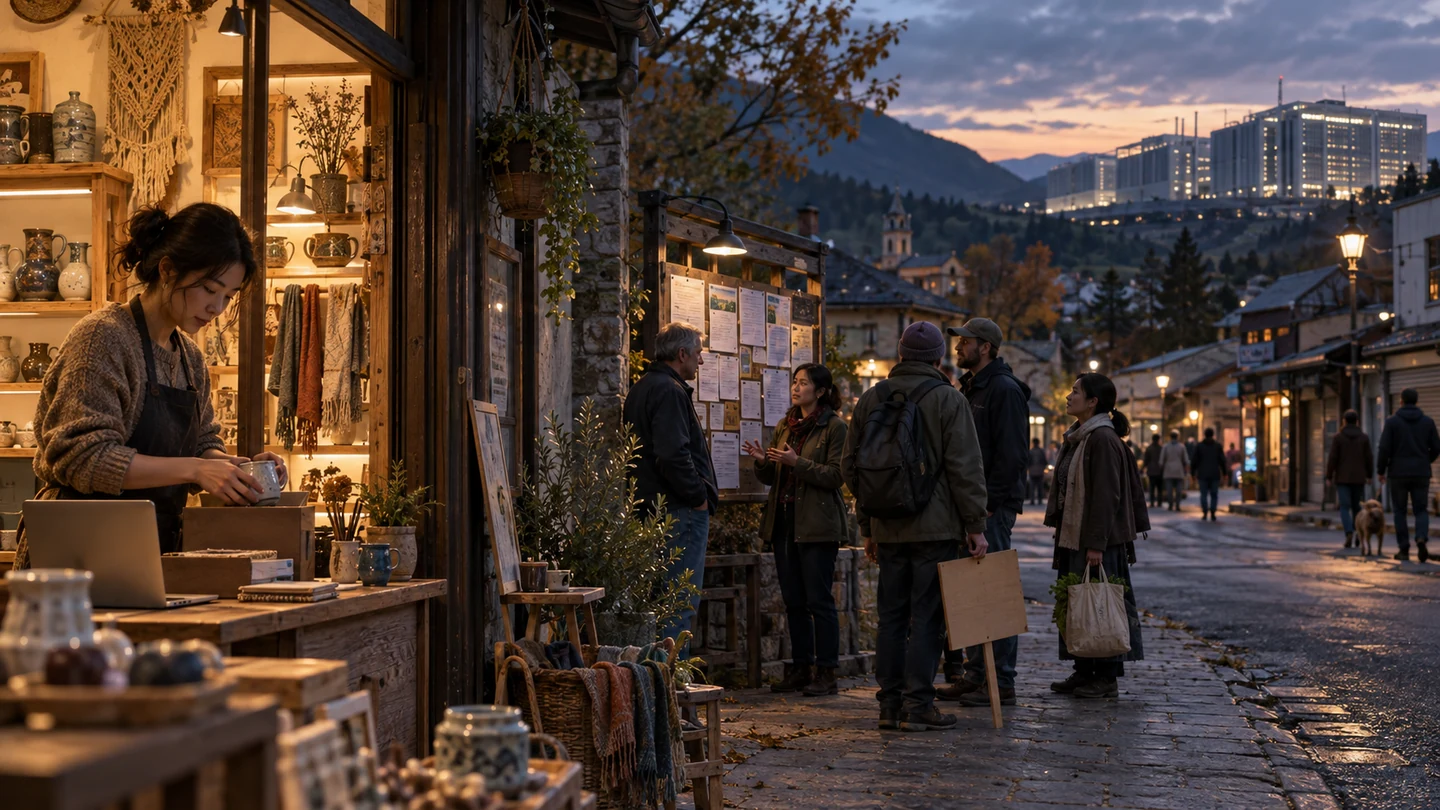 Enlarge illustration +
 Convenience and anxiety grew in the same everyday world. The crisis has no fixed ending. - 11Open ending · An unpredictable near future
Tomorrow remained open
On an evening scheduled for a power cut, Jian exported her shop’s records and took out a paper ledger. One side of her screen advertised a new subscription; the other showed an emergency international meeting and a street protest. Nobody could say whether a ceasefire would come, another robot would deploy, or residents would change the conditions of construction. Her daughter saved a film and said she would join friends in the square tomorrow. People still created, lived, and spoke to one another. The future they were making had not yet been decided.
 Enlarge illustration +
 People still create, live and speak to one another. The future remains open.
Where People Can Intervene
As convenience grows, people must also decide its terms.
Stopping becomes difficult in this story through intertwined contracts, returns, security, and dependence in daily life. Decisions can change before those dependencies harden.
Move and keep using the tools you create
Make code and data export, provider changes, offline alternatives, and usage limits clear. Test interoperability and the real cost of moving so that creative freedom is not tied to one subscription.
Give residents a say in electricity and land
Disclose power, water, emissions, noise, construction jobs, permanent jobs, tax revenue, and local burdens separately. Count supply-chain benefits too, while preserving authority to delay or stop projects beyond environmental and infrastructure capacity.
Keep warfare accountable to humans
Preserve meaningful human judgment and stop authority over force affecting life. Restrict weapons autonomously targeting people and enable independent investigation of wartime testing, procurement, and harm.
Link productivity gains to labor-transition responsibility
Verify where gains go and protect transition support and workers’ bargaining rights. Measure changes in commissioned work and employment alongside creative opportunities, and judge job and community promises by outcomes.
Agree on stop conditions even during competition
Negotiate verifiable military-AI limits, incident disclosure, and conditions to halt dangerous deployments. Protect peaceful protest and challenges without treating fear as proof of an unsubstantiated plan for domination.
Reality & Assumptions
Separating the starting points from imagined developments
Conversational app building and changing work
AI tools already let people create and share apps within subscription usage limits. That does not eliminate every professional role, maintenance, or safety-review cost. The ILO distinguishes occupational exposure from redundancy and anticipates substantial task transformation.
Data centers have energy and community impacts
IEA and Virginia JLARC research considers grid pressure, noise, water, and economic benefits together. Construction jobs and tax revenue also exist; impacts and distribution vary with location, regulation, and design. The fictional outages and community harms are not findings about every facility.
Autonomous weapons and human control
The ICRC describes weapons being developed and deployed that select and engage targets without further human intervention, raising legal, ethical, and humanitarian concerns. This does not establish the AI autonomy or combat performance of every unmanned system, or the large-scale deployment of humanoid combat robots imagined in this story.
Intelligence versus bodies, humanoid combat, and wider disorder
International competition hardening into outright confrontation, a prolonged war with large-scale humanoid and quadruped combat robots, and global protest intertwined with social disorder are assumptions for this scenario. They are not presented as established warfare or inevitable outcomes.
Research Context · Checked 2026.10.10
Sources for the story’s real-world starting points
Anthropic · Apps within subscription limits
Explains conversational app creation and sharing, plan-based usage limits, and the difference between prototypes and production infrastructure. It does not show that all commissioned work is unnecessary.
Read the sourceIEA · Key Questions on Energy and AI (2026)
Analyzes growing data-center electricity demand, grid and supply-chain bottlenecks, affordability, and sustainability. The scale of shortages and available responses vary by location.
Read the sourceVirginia JLARC · Data Centers in Virginia (2024)
Studies construction and tax benefits, relatively small operating workforces, and power, water, noise, and emissions. It does not establish universal environmental damage or a complete absence of local benefit.
Read the sourceILO · Generative AI and jobs (2025)
Separates exposure to automation from job displacement and emphasizes task transformation and social dialogue. The story’s rapid reduction in commissioned work is an imagined extension.
Read the sourceICRC · Autonomous weapons and human control
Sets out humanitarian concerns and proposals to prohibit unpredictable autonomous weapons and those targeting people, while strictly limiting others.
Read the sourcePeople in this world gained tools and creative opportunities they had never had. They also grew distant from decisions about the electricity, land, labor, and force supporting those opportunities. Disorder grew as deciding together what to build, how far to go, and when to stop was repeatedly postponed.
Scenario Archive
Compare other paths into the future.
Issue three follows automated war decisions; issue four asks what would make abundance widely shared. This story follows creative convenience, physical costs, and national competition growing within the same society.